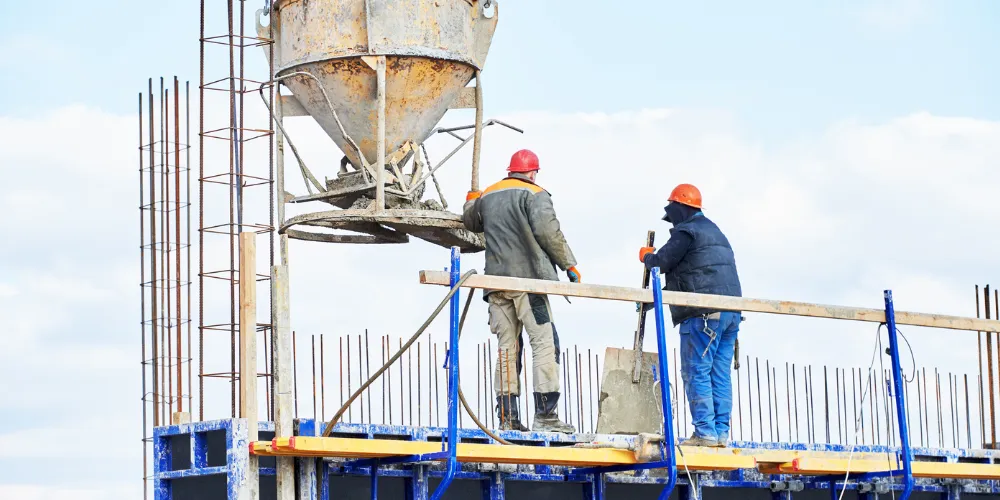
Concrete Slab and Foundation Work: The Ultimate Guide for a Solid Structure
When someone mentions concrete slab and foundation work, many think “just pour concrete, done.” But that’s superficial. Foundations hold everything up — literally. A mistake here means cracks, shifting, or worse.
At Tranes Customs, we don’t treat concrete like “gray glue.” We see it as the core of your structure’s life. Every slab pour, every foot of footing, we plan, test, protect. That’s the difference.
In this article, you’ll get more than the basics. You’ll learn: what slab & foundation work actually entails; how to evaluate contractors; what drives cost; how to maintain & repair; and tips few others share. By the end, you’ll feel confident in decisions — and know why Tranes Customs leads in reliability.
Let’s get into it.
Key Takeaways
The full scope of concrete slab and foundation work — what’s included, what matters
How to vet and compare proposals — what to insist on
Major cost drivers and how to avoid overpaying
Common failures, and how to prevent them before they start
Maintenance and repair strategies for long-term performance
What “Concrete Slab and Foundation Work” Really Means
Concrete slab and foundation work isn’t just “pour concrete under the house.” It’s designing, preparing, executing, and protecting the load-bearing system that supports your entire structure.
Core Elements
Soil & site preparation: testing, grading, compaction
Footings / footers: concrete beams that spread the load
Slab or foundation walls: the actual structural element
Reinforcement & steel: rebar, wire mesh, tensioning
Moisture and vapor barriers: to protect from water intrusion
Curing & protection: control of environment while concrete gains strength
Inspection & quality control: verifying specs match reality
Each piece is essential. If one fails, the rest suffer. A foundation problem is not cosmetic — it’s structural.
Concrete just poured badly can crack, shift, or settle. Soil shifts, poor compaction, water issues — these can wreck sloppy foundation work.
That’s why the quality of foundation work is central. And why concrete services that also include slab/foundation experience are more trustworthy.

Types & Techniques in Slab & Foundation Work
Not all foundations are created equal. The choice depends on climate, soil, loads, budget, and design.
H2: Common Types of Slabs & Foundations
H3: Slab-On-Grade / Monolithic Slab
A slab-on-grade is poured directly on a prepared base (gravel, compacted soil). The footings can be combined with slab in one pour (monolithic).
Pros: faster, less labor, cost-effective in many climates.
Cons: in colder climates, frost heave is a risk if not designed properly.
H3: T-Shaped Slab / Stem-Wall
Here, the footers extend deeper below frost line (in colder zones), with vertical wall portions (stem walls) above. Slab poured within the walls.
H3: Floating Slab
A slab that “floats” on level soil, with minimal or no deep footings. Common for garages, small additions.
H3: Specialized Slab Types
Waffle slab / ribbed slab: uses voids or ribs to reduce material and weight, add stiffness.
Voided biaxial slab: includes voids in the middle to lighten the slab while preserving strength.
Each technique has tradeoffs. Your contractor must match the design to soil, load, climate — not just pick the cheapest method.
How to Vet Proposals and Contractors for Slab & Foundation Work
Now you have options. How do you pick someone who won’t leave you with a disaster?
H2: What to Insist On in a Good Proposal
Detailed soil report: including compaction, bearing capacity, moisture content
Exact dimensions and depths of footings, slabs, walls
Mix design and concrete strength (PSI), including additives
Reinforcement layout: rebar, mesh, spacing
Moisture / vapor barrier specification
Drainage and water control plan
Curing plan: how they’ll protect the concrete early
Quality control & testing: slump tests, cylinder breaks
Warranty / liability and what they will correct
Clear exclusions: what’s not included
If the contractor can’t or won’t provide these, that’s a red flag.
H3: Ask Smart Questions
What’s your experience doing slab & foundation work in my area/soil?
Do you handle concrete services beyond just foundations?
How do you deal with unexpected soil issues?
Can I see past job photos or inspections?
How will you protect from water intrusion?
The right contractor doesn’t dodge — they explain. That’s what sets Tranes Customs apart: transparency, detail, confidence.
Cost Factors in Concrete Slab & Foundation Work
Understanding costs helps you see through quotes.
H2: What Makes it Expensive (or Reasonable)
Soil & site prep
If soil is poor (clay, organic matter) or unlevel, you’ll need extra work.Footing depth & design
Deeper or larger footings cost more.Concrete volume & mix strength
Stronger mix, additives, higher volume = higher cost.Reinforcement & steel
More rebar, better steel, tricky layouts — cost goes up.Drainage, waterproofing, insulation
Moisture barriers, insulation, drainage layers all add up.Access, logistics, labor
Tight job sites, difficult access, slopes, staging — all drive labor cost.Testing, inspections, adjustments
Quality control isn’t free; but skipping it costs more down the road.
H3: Sample Ballpark Figures
These are approximate and vary widely by region, but helpful as benchmarks:
Simple slab foundation (residential): $8-$15 per sq ft
More complex foundations with footings/walls: $15-$30+ per sq ft
Specialty designs or difficult soil: more
Remember: a low bid often skips things (testing, waterproofing, proper curing). Beware.
Common Failures & How to Prevent Them
Many slab and foundation issues stem from overlooked details. Let’s uncover the traps.
H2: Typical Problems That Happen
Uneven settlement / sinking — soil not compacted or soft zones under slab
Cracking — due to shrinkage, thermal stress, improper jointing
Moisture intrusion / slab dampness — poor vapor barrier or drainage
Heaving / frost damage — in climates with freezing and no proper design
Delamination or surface failure — poor curing or finishing
Wall-slab separation — lack of bond or structural detail
H3: Preventive Measures (Real Advice)
Always require a soil report and compaction testing
Use a properly specified vapor/moisture barrier
Design and place control joints (in slab and footing)
Use reinforcement wisely—don’t under-reinforce
Stay vigilant on curing. Don’t rush it.
Provide drainage and keep water away from foundation
Don’t ignore small cracks — repair early
One example: a builder skipped the vapor barrier. Years later moisture caused delamination. The fix? Remove surface, reapply barrier, re-screed. Extra cost — avoidable.
Tranes Customs treats each job as unique — not “just another slab.” That mindset prevents many failures right from the start.

The Overlap Between Foundation Experts and Driveway Pros
Here’s something most people don’t think about — the best foundation contractors often have roots in driveway work too.
A skilled driveway paving contractor knows all about grading, leveling, compaction, and how water behaves around a structure. Sounds familiar? It should. Those same principles decide whether your foundation stays solid or starts cracking in a few years.
That’s why at Tranes Customs, we don’t separate those skills. We’ve spent years doing both — driveways and foundations — and honestly, that’s what makes our work so reliable. Our crew knows how concrete behaves in different settings. How it expands, how it drains, how it holds under weight. That knowledge transfers directly into our concrete slab and foundation work.
Why Choose Tranes Customs for Your Concrete Slab and Foundation Work?
Because you deserve a foundation you can sleep on. Not worry over.
Experience with both foundational work & related concrete services
Transparent proposals — no hidden costs
Quality control at every stage, not just at the end
Local soil/ climate knowledge — critical for good design
Commitment to durability, not shortcuts
When you call Tranes Customs, you get more than a contractor. You get someone invested in your structure’s longevity.
FAQs
1. How thick should a slab foundation be?
Typical residential slabs are 4-6 inches thick. But depending on load, soil, or structural needs, you may need more.
2. What’s the difference between a slab and a full foundation?
A slab is flat concrete poured directly on grade. A full foundation includes footings, walls, crawlspaces or basements.
3. Can I modify a foundation design later?
Only to a degree. Major changes often require structural reevaluation and may need partial demolition.
4. How long until a slab gains full strength?
Concrete is often cured for 28 days to reach its design strength, though it gains much of its strength earlier.
5. Do all slabs crack?
Many do, to some degree. The goal is to control cracking — with joints, reinforcement, good design — not eliminate it entirely.
Conclusion
Concrete slab and foundation work is the backbone of any building. It demands care, design, precision, and foresight. A mistake in the base ruins everything above it.
If you apply what you’ve learned — insist on detail, compare proposals smartly, plan for moisture, act quickly on cracks — you’ll set your structure up for a long life.
And if you’re ready for an expert partner, Tranes Customs is ready. We build with integrity, technical mastery, and respect for your investment.
Call to Action
Ready to start your foundation project right? Contact Tranes Customs now for an expert and free estimate. Let’s design and build something that lasts.
